OSTP
case study
Reducing CO₂ emissions and transportation costs: Systems thinking as a competitive advantage at OSTP Finland
“Taitopilvi helped us turn vague loading rules and long-standing practices into clear, data-driven algorithms that truly improved our logistics operations.”
Emil Tiihonen, IT & OD Project Manager & Business Data Architect, OSTP Finland
The challenge
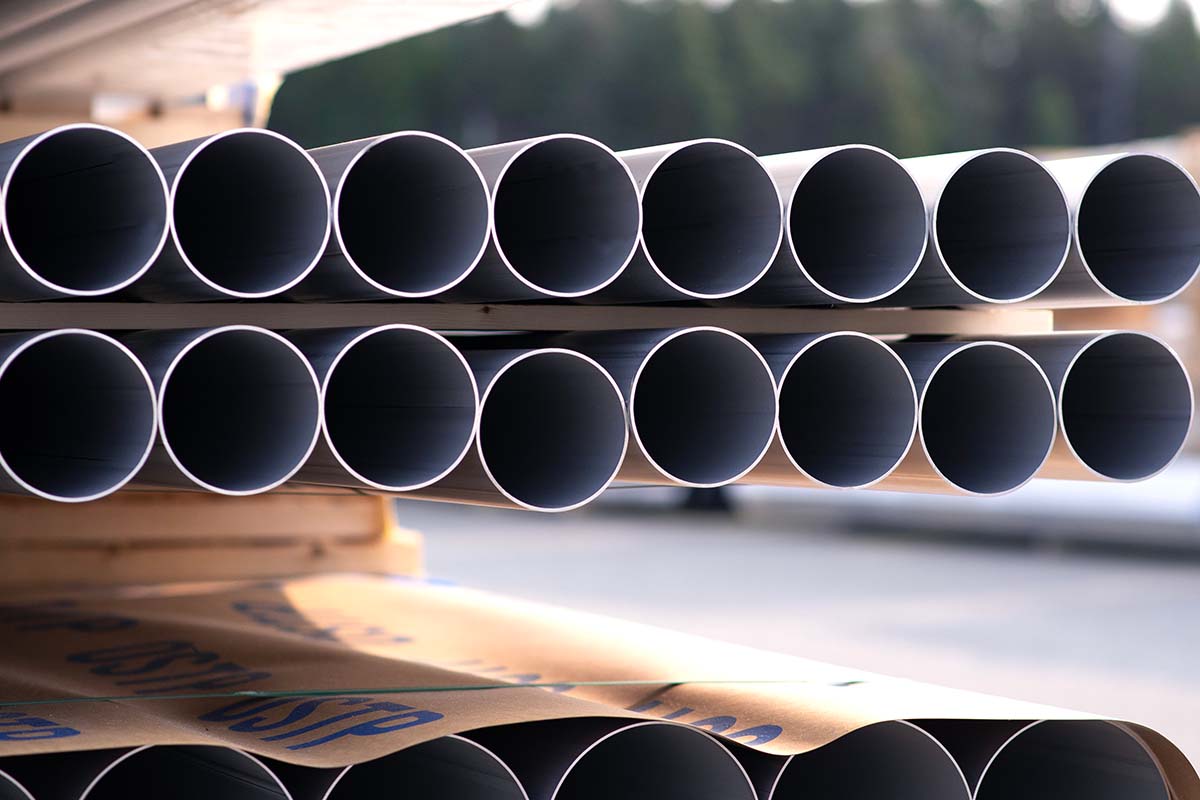
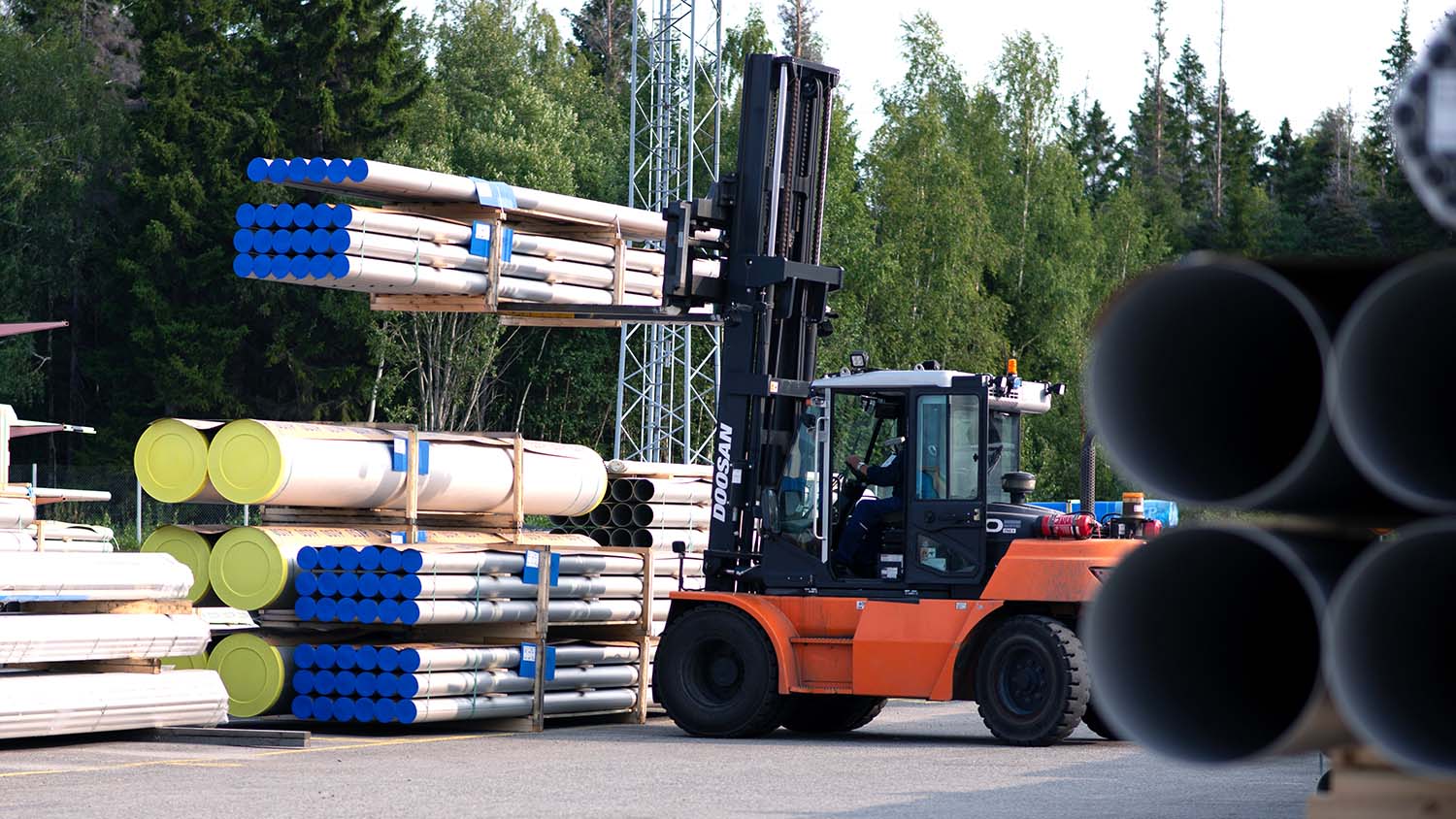
OSTP Finland delivers 10–12 truckloads of stainless steel pipes and fittings every workday. Efficiently planning truckloads is complex due to multiple factors, including varying product sizes and customer-specific requirements. Converting ordered product lines to truckload was previously done manually. OSTP Finland needed to maximize truck utilization without sending half-empty trucks, as they bear all freight costs. Achieving optimal loading requires precise knowledge of how different products, lengths, and quantities fit on trucks—taking into account truck sizes, split and special packages, loading rules, unloading order, and customer-specific needs. This information also had to be easily accessible to employees during daily operations.
The solution
The collaboration began with a pre-study and a proof-of-concept prototype. We mapped the business processes and systems from sales through outbound logistics to identify each user group’s key challenges and design a smooth, tailored user experience.
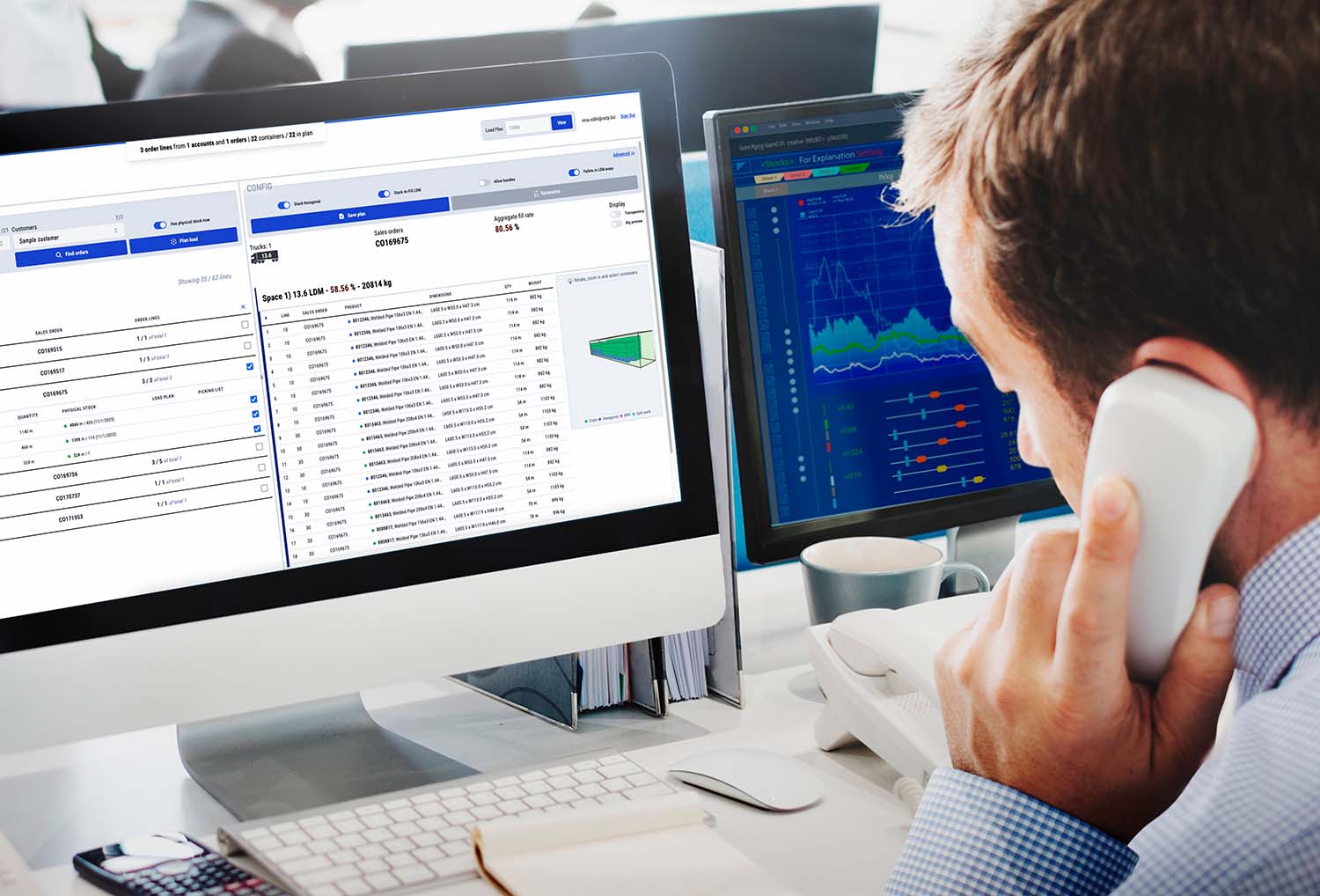
A heuristic 3D load-planning solver was implemented to efficiently organize containers using packing rules, statistics, geometry, and heuristics, taking into account size, type, weight, and height. It uses a f irst-fit algorithm and can automate packing mathematically, providing a practical, fast, and cost-effective loading solution. The result of the calculation is displayed in a 3D preview, within a tailored web application.
After a few sprints, a prototype was delivered that convinced stakeholders and validated the business case using real data. The development of the prototype continued to evolve into a fully functional, everyday tool, enabling customer support to create load plans for logistics and eliminating the need for manual planning. The solution was completed within 3–4 months, on budget, and successfully integrated into daily operations.
Close collaboration and requirements gathering with an experienced logistics professional from OSTP Finland were keys to success. A product owner worked with the development team to continuously prioritize requirements.
The benefits
The predictability and accuracy of load planning have significantly improved compared to the previous manual capacity planning process. From sales to customer support to logistics, everyone can share an understanding of the capacity needed for a specific set of products. Trucks can be ordered in advance, instead of after the products are picked. This results in decreasing CO₂ emissions and reduction in transportation costs as fewer trucks are required to move the same amount of goods.
Services used
Process modeling, Service Design, UX Design, Rapid Prototyping, Frontend development, Backend development, CI/CD, DevOps, Web development, Architecture design, API development & Integration, Quality Assurance.